Managing money has become more important than ever. Many people struggle to track where their money goes every month. Small daily expenses often grow into bigger financial problems without proper planning.
Thankfully, modern budgeting apps make money management much easier. These apps help users track spending, create budgets, monitor savings, and improve financial habits directly from their smartphones.
Whether you are a student, working professional, freelancer, or beginner in personal finance, budgeting apps can help you stay financially organized.
In this article, we will explore the best budgeting apps for managing daily expenses in 2026. You will also learn how to choose the right app and use it effectively.
Why Budgeting Apps Are Helpful
Many people think budgeting is difficult. However, budgeting apps simplify the process.
Instead of writing expenses manually in notebooks, apps automatically organize spending categories and show financial reports.
Main Benefits of Budgeting Apps
- Track daily expenses easily
- Reduce unnecessary spending
- Build savings habits
- Set monthly financial goals
- Improve money management skills
- Get spending alerts and reminders
Most apps are beginner-friendly and easy to use.
How Budgeting Apps Work
Budgeting apps connect your spending habits with financial tracking tools.
Some apps allow users to:
- Add expenses manually
- Link bank accounts
- Create savings goals
- Monitor bills
- Analyze spending patterns
Many apps also provide visual charts and reports that make budgeting easier to understand.
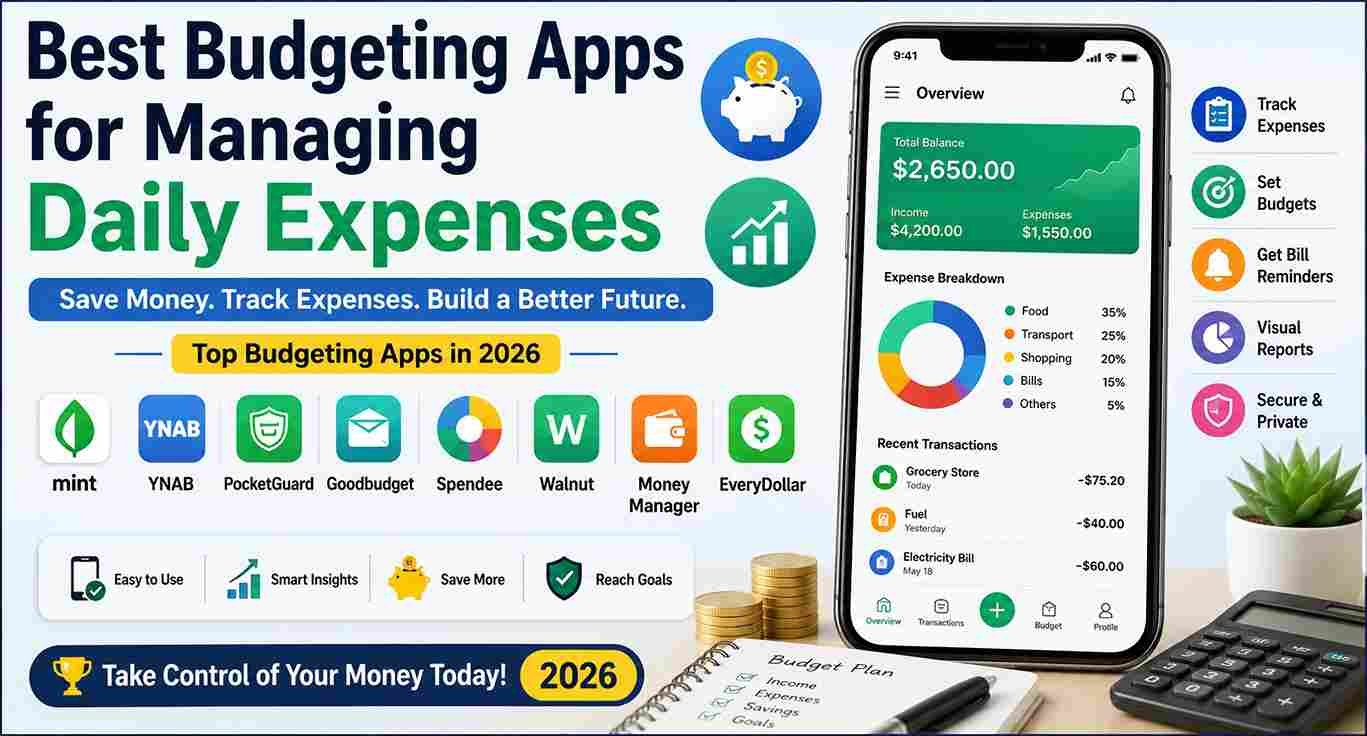
A simple mobile finance app screen showing expenses and savings can help users stay aware of their financial condition daily.
1. Mint
One of the Most Popular Budgeting Apps
Mint is widely known for its simple interface and powerful budgeting features.
It helps users:
- Track expenses
- Monitor bills
- Create monthly budgets
- Get financial alerts
Why Beginners Like Mint
The app automatically categorizes spending, which saves time and effort.
Example
If you spend money on food delivery, Mint places it under the “Food” category automatically.
Best For
- Beginners
- Students
- Daily expense tracking
2. YNAB (You Need A Budget)
Great for Serious Budget Planning
YNAB focuses on proactive budgeting.
The app encourages users to assign every rupee or dollar a purpose before spending.
Key Features
- Goal-based budgeting
- Spending tracking
- Savings planning
- Financial education tools
Practical Tip
YNAB works best for people who want detailed control over their finances.
Best For
- Long-term budgeting
- Families
- Financial discipline
3. PocketGuard
Easy App for Controlling Overspending
PocketGuard helps users understand how much money is safe to spend after bills and savings.
The app calculates:
- Income
- Bills
- Savings goals
- Remaining spendable amount
Why It Is Useful
Many people overspend because they do not know how much money is actually available.
PocketGuard solves this problem simply.
Best For
- Daily expense management
- Overspending control
- Beginners
4. Goodbudget
Digital Envelope Budgeting System
Goodbudget uses the envelope budgeting method.
Users divide money into different categories such as:
- Food
- Travel
- Shopping
- Rent
- Savings
This system helps users spend carefully within limits.
Main Features
- Shared family budgeting
- Expense tracking
- Debt management
- Financial planning
Best For
- Couples
- Families
- Simple category budgeting
5. Spendee
Clean Design and Easy Expense Tracking
Spendee is popular because of its attractive interface and simple expense management tools.
Users can:
- Track spending
- Create budgets
- Manage wallets
- Analyze expenses visually
Why Users Like Spendee
Its colorful charts and clean dashboard make financial tracking less stressful.
Best For
- Visual learners
- Young professionals
- Personal budgeting
6. Walnut
Helpful Budgeting App for Indian Users
Walnut is widely used in India for expense tracking.
The app automatically reads SMS transaction alerts to track spending.
Main Features
- Expense tracking
- Bill reminders
- Spending insights
- Group expense management
Practical Tip
Walnut is useful for people who prefer automatic expense tracking instead of manual entry.
Best For
- Indian users
- Daily transaction tracking
- Expense reminders
7. Money Manager
Simple App for Expense Tracking
Money Manager is popular for its clean and organized layout.
The app allows users to:
- Record expenses
- Track income
- View financial reports
- Manage budgets
Why It Stands Out
Its accounting-style system is simple yet detailed.
Best For
- Beginners
- Offline expense management
- Personal finance organization
8. EveryDollar
Beginner-Friendly Budgeting Tool
EveryDollar follows a zero-based budgeting method.
The app helps users plan expenses before spending.
Key Benefits
- Simple interface
- Monthly budgeting
- Expense planning
- Savings tracking
Best For
- First-time budgeters
- Monthly financial planning
How to Choose the Right Budgeting App
Not every budgeting app fits every person.
Choose an app based on your needs and lifestyle.
Ask Yourself These Questions
Do You Want Automatic Tracking?
Apps like Mint and Walnut are useful for automation.
Do You Prefer Manual Budgeting?
YNAB and EveryDollar offer detailed planning control.
Do You Need Family Budgeting?
Goodbudget works well for shared finances.
Do You Want Simple Expense Tracking?
PocketGuard and Money Manager are easier for beginners.
Important Features to Look For
Before downloading any budgeting app, check these features.
1. Easy Interface
The app should be simple to understand.
Complex dashboards may discourage beginners.
2. Security
Choose apps with:
- Password protection
- Data encryption
- Secure login systems
Financial data safety is very important.
3. Expense Categories
Good apps organize spending into categories automatically.
4. Savings Goals
Savings tracking helps users stay motivated financially.
5. Notifications and Reminders
Bill reminders prevent missed payments.
Tips for Using Budgeting Apps Effectively
Downloading an app alone will not improve finances.
Consistent usage matters most.
1. Update Expenses Regularly
Track spending daily or weekly.
Small updates are easier than monthly corrections.
2. Set Realistic Budgets
Do not create impossible spending limits.
Practical goals are easier to maintain.
3. Review Monthly Reports
Budgeting apps provide useful spending summaries.
Reviewing reports helps identify unnecessary expenses.
4. Track Small Purchases
Small expenses often cause major financial leaks.
For example:
- Snacks
- Coffee
- Online subscriptions
- Food delivery
Tracking these habits improves savings.
5. Build Emergency Savings
Use budgeting apps to create emergency funds slowly.
Even small monthly savings matter.
Common Budgeting Mistakes People Make
Many users stop budgeting because of unrealistic expectations.
Mistakes to Avoid
- Ignoring daily expenses
- Setting overly strict budgets
- Forgetting subscriptions
- Not reviewing reports
- Quitting after one bad month
Budgeting is a long-term habit, not a quick fix.
Are Budgeting Apps Safe?
Most trusted budgeting apps use strong security systems.
However, users should also:
- Use strong passwords
- Enable two-factor authentication
- Avoid public Wi-Fi for financial logins
- Download apps only from official app stores
Online financial safety is important.
Why Students and Young Professionals Should Use Budgeting Apps
Young people often struggle with:
- Impulse spending
- Poor savings habits
- Unplanned expenses
Budgeting apps help create financial discipline early.
A simple mobile finance app screen displaying income, savings, and expenses can increase awareness and improve money habits daily.
Learning budgeting early also reduces future financial stress.
Conclusion
Managing daily expenses becomes easier when you understand where your money goes. Modern budgeting apps simplify this process and help users build healthier financial habits.
Whether you want to save money, control spending, or plan monthly budgets, there is a budgeting app suitable for your needs.
The key is consistency. Start with one simple app, track your expenses regularly, and review your financial habits honestly.
Small improvements in money management today can create better financial stability in the future.
FAQs
1. Which budgeting app is best for beginners?
Mint, PocketGuard, and Money Manager are beginner-friendly budgeting apps.
2. Are budgeting apps free to use?
Many budgeting apps offer free versions with useful features, while some provide premium plans.
3. Can budgeting apps help save money?
Yes. They help users track spending, avoid overspending, and build savings habits.
4. Are budgeting apps safe for bank connections?
Most trusted apps use strong encryption and security systems to protect user data.
5. Which budgeting app is best for students?
Walnut, Mint, and Spendee are popular choices for students because they are simple and easy to use.